








Digital forms are electronic versions of paper forms that let users enter, submit, and process information online. Solutions like SmartIQ support complex use cases by connecting to existing systems to…
Read More


The Smart Communications Conversation Cloud is the only cloud platform delivering personalized, omnichannel conversations across the entire customer experience.
Explore the Platform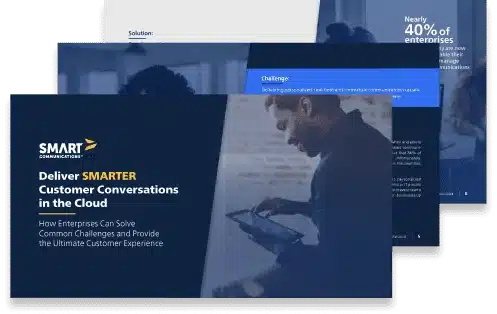
Explore how enterprises can leverage a cloud-based, CCM platform to optimize the end-to-end customer experience.
Learn More





We work with best-in-class technology and consulting companies to offer integrated solutions that complement our family of products.
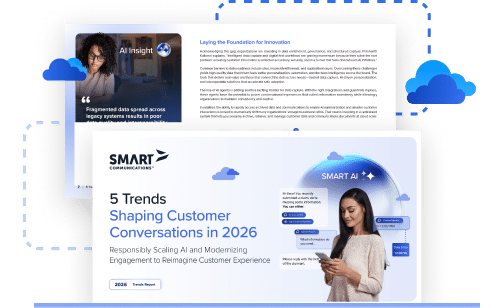
Insights from 20+ partners and analysts on optimizing customer engagement in 2026.
Digital forms are electronic versions of paper forms that let users enter, submit, and process information online. Solutions like SmartIQ support complex use cases by connecting to existing systems to…
In the context of digital archiving, immutable means that a document or record cannot be altered or deleted after it is stored. Solutions like SmartHUB ensure immutability to support regulatory…
The purpose of document archiving is to securely store important records for long-term access, regulatory compliance, and business continuity. Many industries have legal requirements for document retention, making archiving essential…
Digital archiving is the process of storing, managing, and preserving digital information—such as documents, records, emails, and data—in a secure, searchable format over time. Unlike traditional file storage, digital archiving…
Document archiving is the process of securely storing documents—such as statements, contracts, and communications—for long-term access, compliance, and record-keeping. Cloud-based solutions, like SmartHUB, offer faster retrieval and greater scalability. Archived…
Omnichannel means providing a consistent, seamless customer experience across all communication channels—like email, SMS, print, and web. In order to achieve that, interactions should be created in a channel-agnostic way,…
Omnichannel orchestration is the process of coordinating customer interactions across channels like email, SMS, web, and print through automated workflows. It ensures customers receive timely, consistent messages—automatically triggering alternative (failback)…
Document automation software enables organizations to automatically create, customize, and deliver documents using templates and data. Modern customer communications management (CCM) platforms like SmartCOMM take this further—allowing companies to use…
Document automation is the use of technology to generate documents—such as forms, letters, and contracts—quickly and accurately using pre-defined templates and data. It reduces manual work, minimizes errors, and ensures…
Output management refers to managing and delivering documents—like statements and letters—across print and digital channels. Traditionally focused on print, this term has evolved into what is now widely known as…