SmartIQ™ helps insurers replace paper forms, static PDFs, and manual intake processes with intelligent digital experiences that guide users, prefill known information, validate responses in real time, and deliver high-quality data directly into downstream systems and workflows.
Insurance Data Collection
Collect Complete Insurance Data With Guided Digital Forms
Replace paper, PDFs, and manual intake with intelligent digital experiences that prefill known information, adapt to each policyholder, and accelerate policy, claims, and servicing workflows.
Schedule a Demo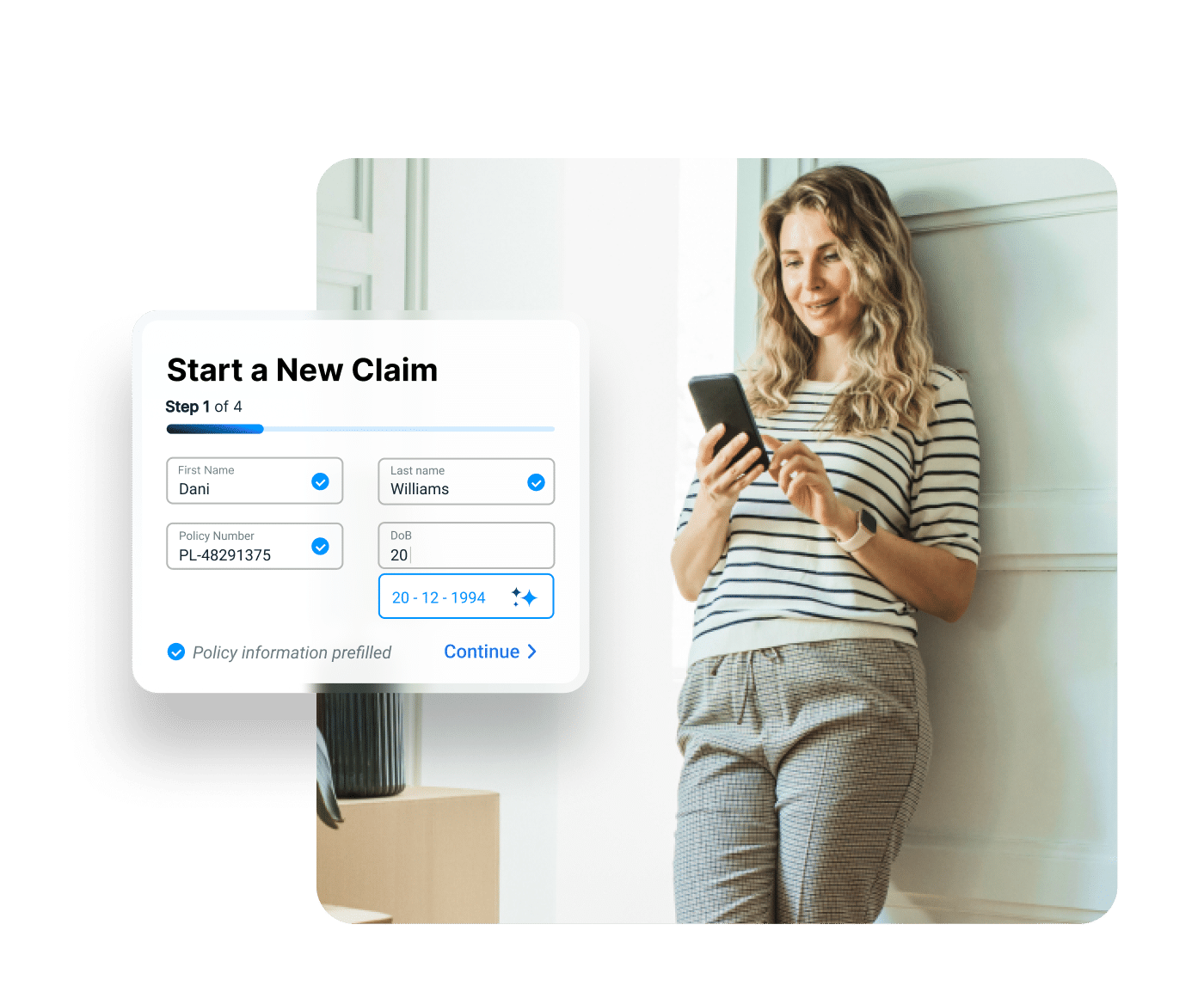
Turn Paper and PDFs Into Guided Digital Experiences
High-quality insurance data is the foundation of faster decisions, streamlined operations, and better customer experiences. Effective data collection brings together the information needed to quote, underwrite, service, and settle claims, helping insurers move work forward with greater speed and accuracy.
THE CHALLENGE
Why Manual Data Intake Creates Risk and Rework
Static forms and disconnected intake processes create friction for customers, agents, adjusters, underwriters, and operations teams. They can slow decisions, increase service costs, and lead to delays, rework, and inconsistent outcomes across policy, claims, and servicing workflows.
- Applicants and policyholders are asked to re-enter information already stored in policy, claims, CRM, or agent systems
- One-size-fits-all forms show irrelevant questions and make complex insurance terminology harder to understand
- Missing fields, inconsistent answers, illegible handwriting, and incomplete attachments create errors and delays
- Manual rekeying and swivel-chair processes increase administrative work and the risk of incorrect downstream data
- State-mandated and regulated forms may need to preserve exact layouts, language, acknowledgments, and signatures
- Form updates can depend on IT, outside vendors, or multiple legacy tools, slowing the response to product and regulatory change
- Paper, email, signatures, and supporting documents may follow separate paths without a complete audit trail
- An application, claims form, or service request has missing or incorrect information, creating an NIGO submission
Get the Right Information Upfront
SmartIQ helps you build guided insurance forms that respond to each user instead of forcing every person through the same static experience. Better guidance and real-time validation help more submissions arrive complete and ready for the next step.
Prefill Known Info
Dynamic Logic & Validation
Complex Question Guidance
Capture Documents & Signatures
Output Control
Prefill Known Information

Use available policyholder, policy, claim, agent, or account data to reduce repeat entry. Prefilling known information shortens the experience and lowers the chance that customers submit details that conflict with existing records.
Apply Dynamic Logic Validation
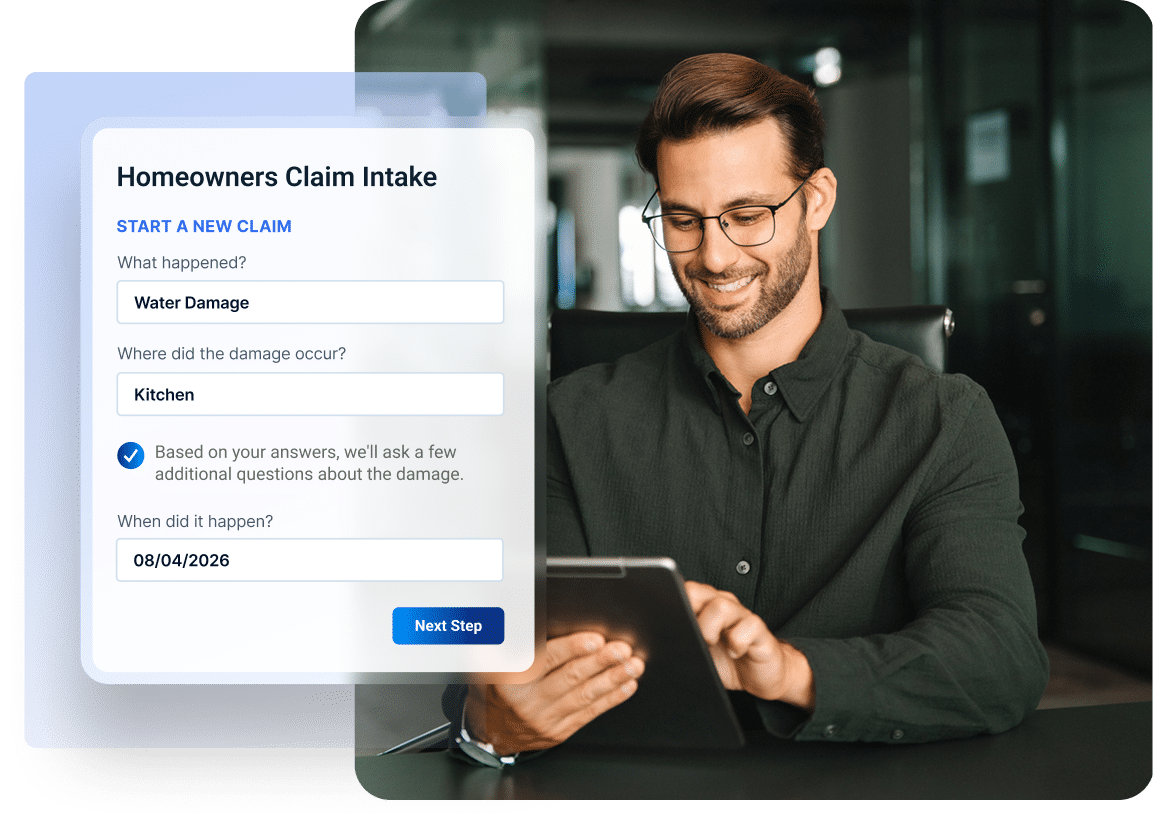
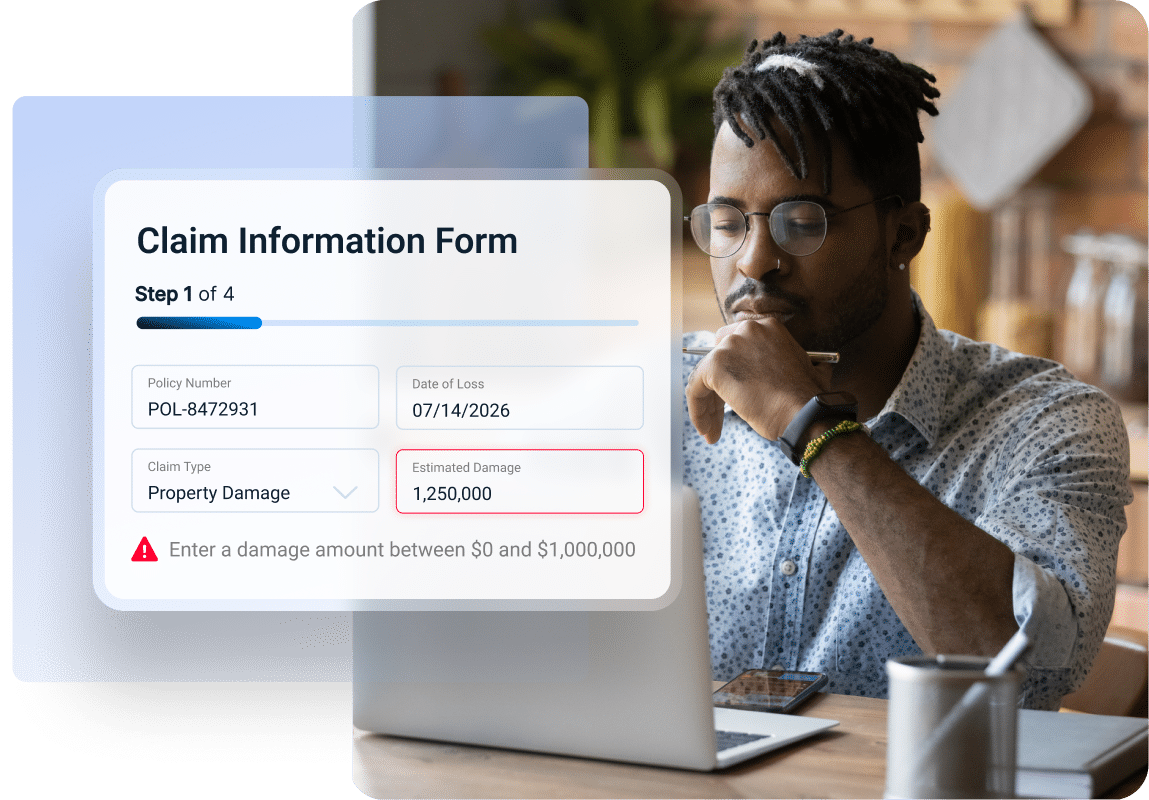
Show questions based on product, policy type, state, claim, risk, prior answers, or other workflow rules. Use mandatory fields, calculations, input masks, inline error handling, and data validation to improve accuracy before the form is submitted.
Guide People Through
Complex Questions
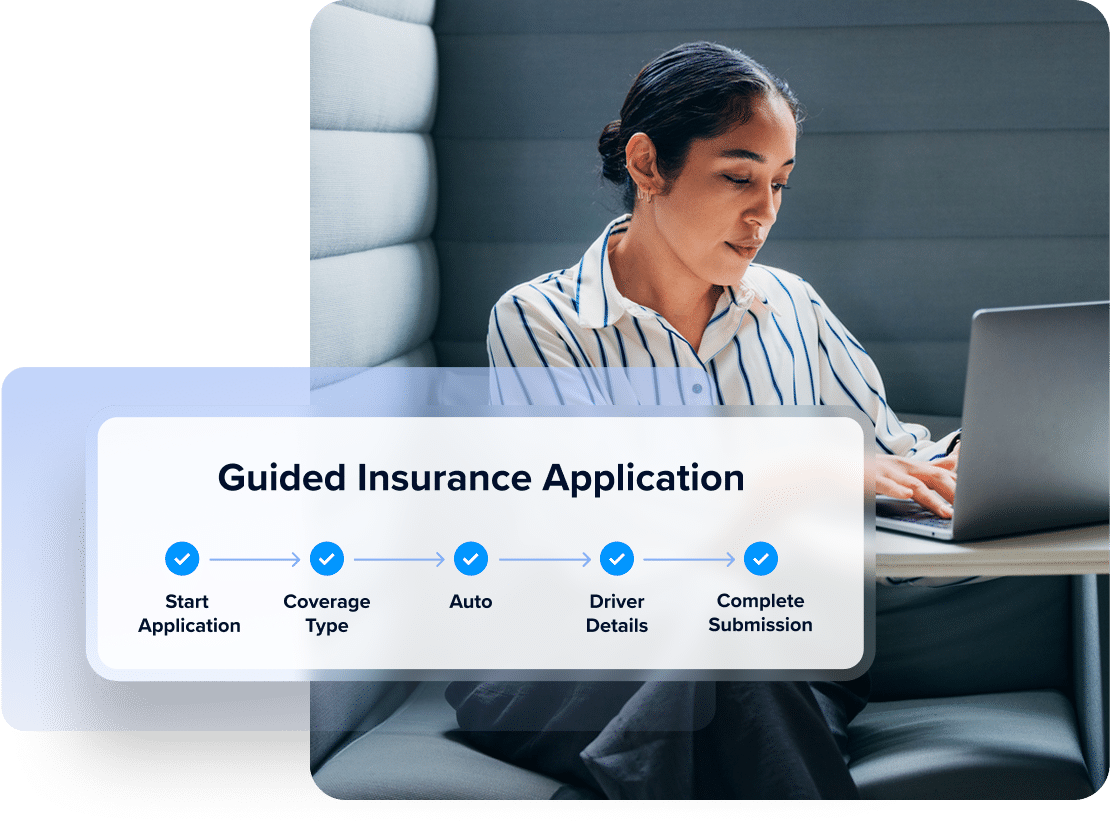
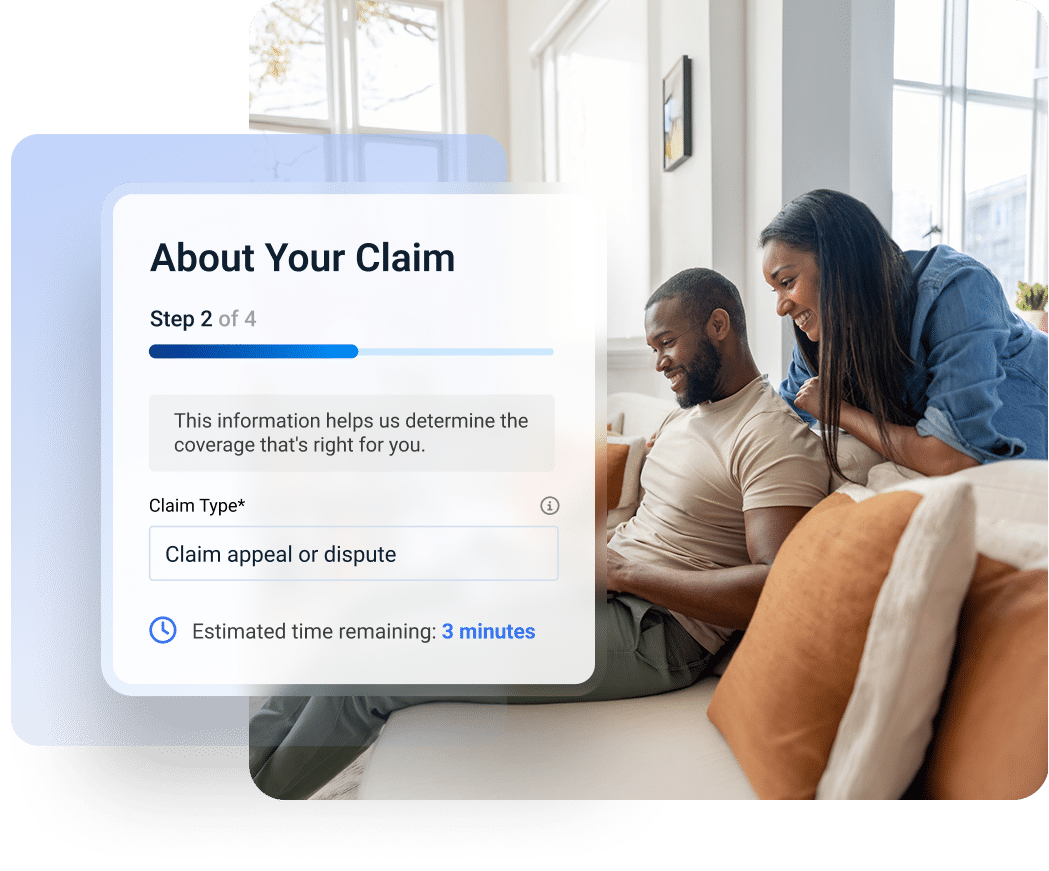
Use plain-language instructions, progress indicators, help text, tooltips, section summaries, and estimated completion information to help applicants, policyholders, claimants, and agents understand what is required and why.
Capture Documents and Signatures
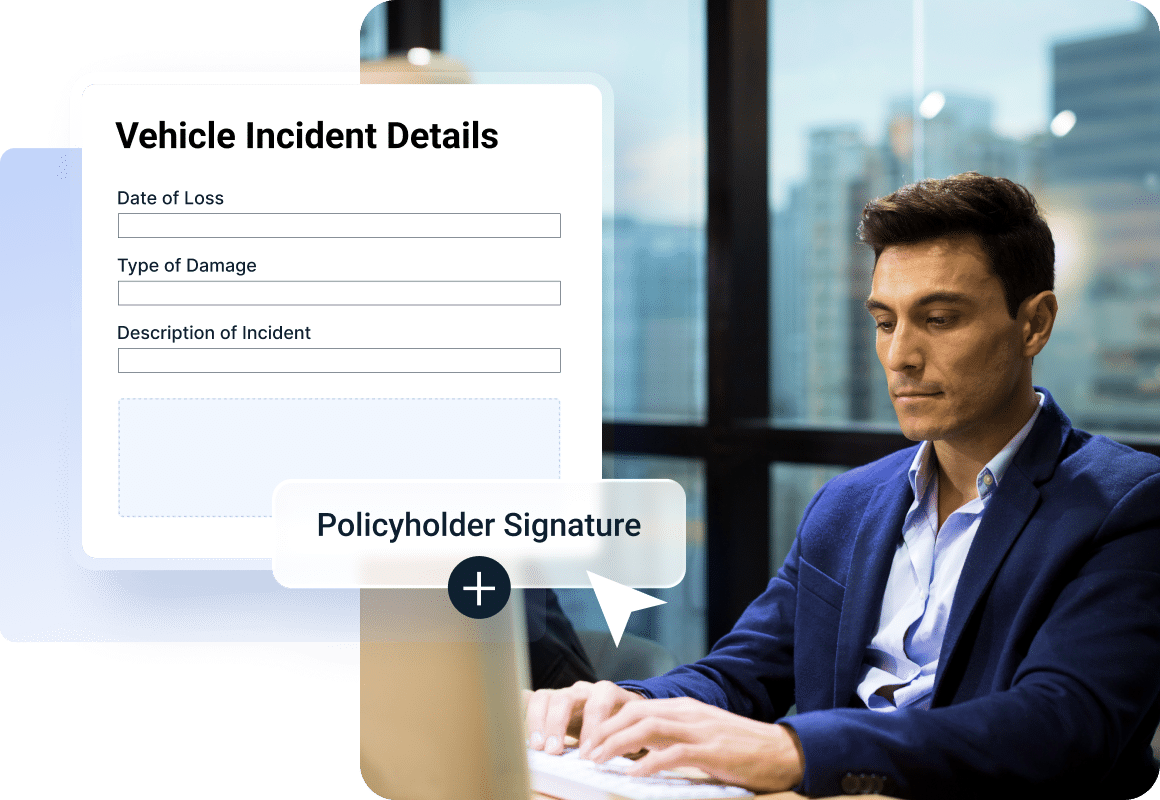
Collect photographs, estimates, inspection records, supporting documents, acknowledgments, sign-on-screen approvals, and eSignatures within the same guided flow where appropriate.
Control Outputs for
Downstream Operations
Return structured data to core systems, generate required documents, and provide error or exception information that helps operations teams diagnose problems before incomplete or incorrect information moves downstream.
Modernize High-Friction Insurance Workflows
Insurance form automation can support the moments where incomplete information, manual handoffs, and slow follow-up create the most friction across the insurance lifecycle.

New Business and Underwriting
Digitize policy applications, supplemental questionnaires, requests for information, risk details, and underwriting evidence. Guided questions and prefilled data help applicants and agents provide more complete information without navigating unnecessary fields.

Claims Additional Information Requests
Collect claimant statements, photographs, repair estimates, medical or supporting documents, acknowledgments, and other information needed to move a claim forward. Real-time tracking gives adjusters greater visibility into what has been requested, returned, or still requires action.

Policy Servicing and Endorsements
Support coverage updates, beneficiary requests,, reinstatements, and other servicing requests with guided forms that apply the right rules and documentation requirements.

Renewal Information Requests
Gather updated risk details, attestations, supporting records, and renewal information through an experience that can adapt by product, geography, policyholder type, or prior response.

Field Underwriting and Loss Control
Give inspectors, risk engineers, agents, and field teams a mobile-ready way to complete assessments, capture photographs, record findings, and submit information without waiting to return to the office.

Life and Annuity Workflows
Guide applicants and advisors through complex applications, suitability information, beneficiary changes, replacement forms, signatures, and supporting documentation while reducing repeated entry and incomplete submissions.
Automate Routing, Reviews, Approvals, and Follow-Up
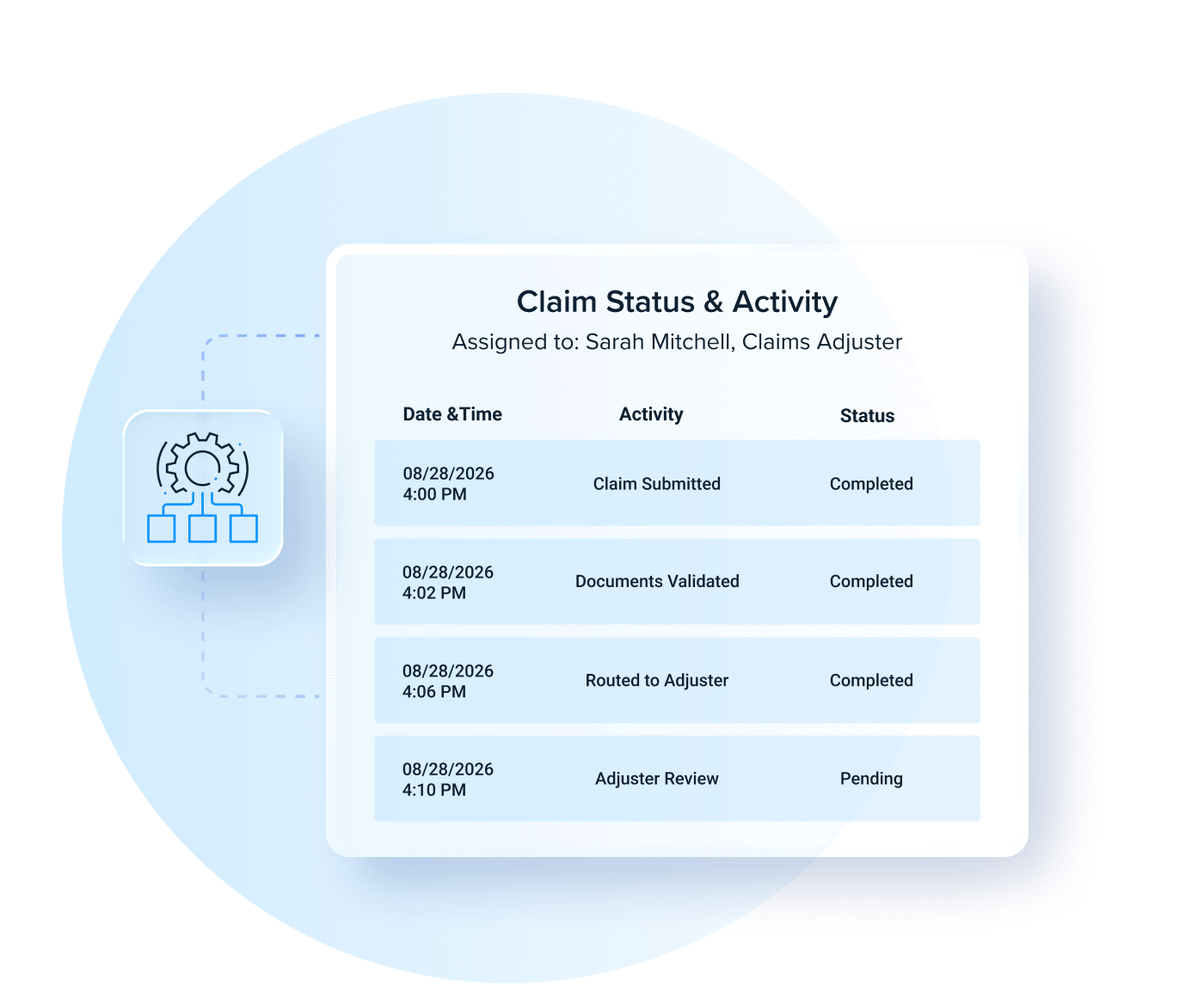
Data collection should move work forward, not create another inbox for teams to manage. SmartIQ can use submitted information and business rules to trigger the right review, approval, signature, task, reminder, or downstream action.
- Route forms to the appropriate adjuster, underwriter, service team, agent, or compliance reviewer
- Request additional information only when an answer, policy type, claim condition, or business rule requires it
- Trigger acknowledgments, signatures, approvals, reminders, and follow-up tasks automatically
- Track form status and completion so teams can intervene before a request stalls
- Return completed data and documents to policy, billing, claims, CRM, or case-management systems
- Maintain a clearer record of what was requested, submitted, reviewed, approved, and changed
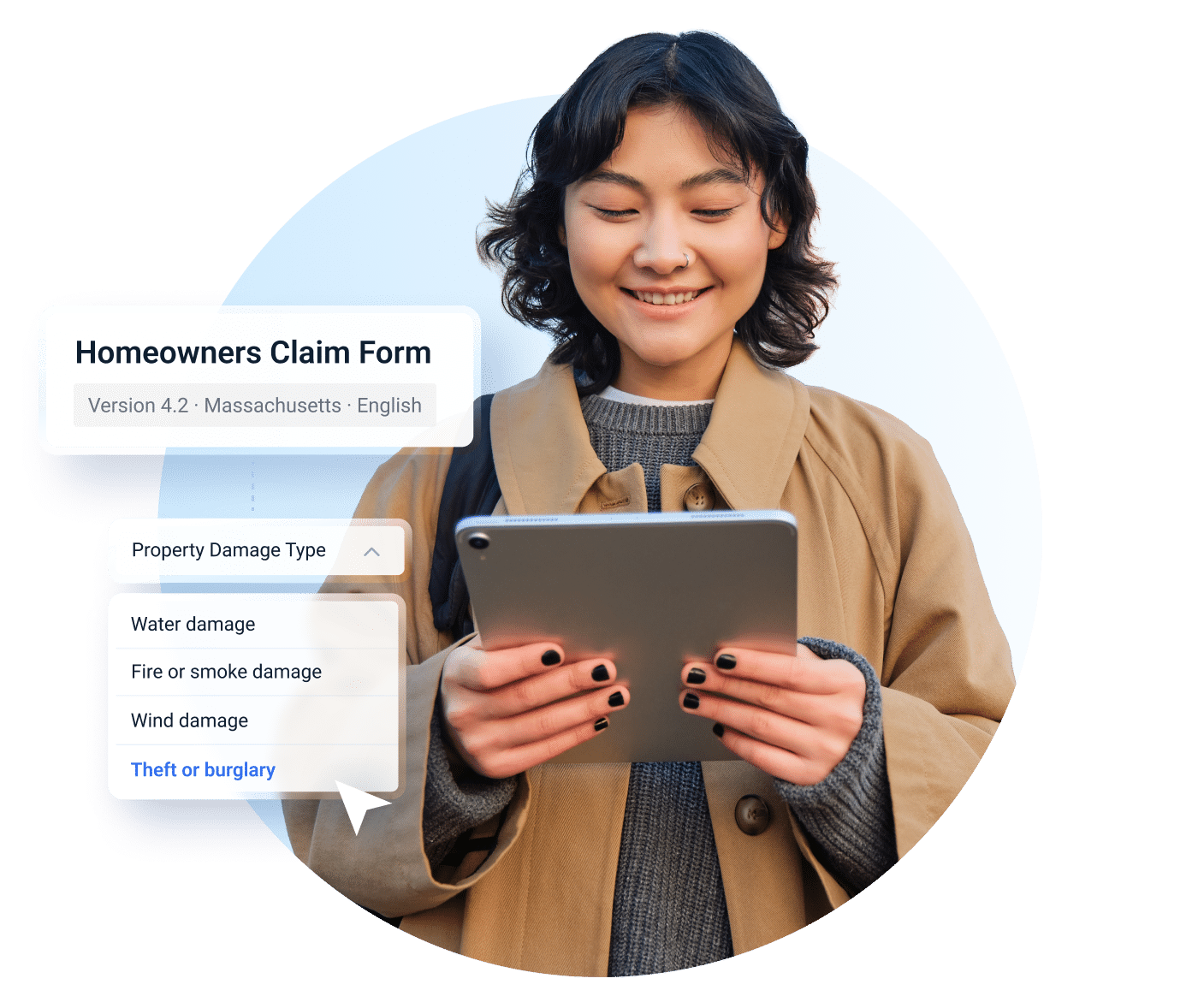
Give Business Teams More Control Without Adding Risk
Insurance forms change as products, regulations, jurisdictions, languages, and operational requirements evolve. SmartIQ gives authorized business and operations teams a low-code, no-code way to update questions, logic, workflows, and content without relying on IT for every routine change. Teams can standardize one experience across products, brands, languages, channels, and regional variations while maintaining versioning, rollback, access controls, data protection, and audit history. This helps insurers move faster without losing the governance required for regulated processes.
- State-mandated and regulated forms may need to preserve exact layouts, language, acknowledgments, and signatures
- Form updates can depend on IT, outside vendors, or multiple legacy tools, slowing the response to product and regulatory change
Connect Data Collection to Communications, Orchestration, and Records
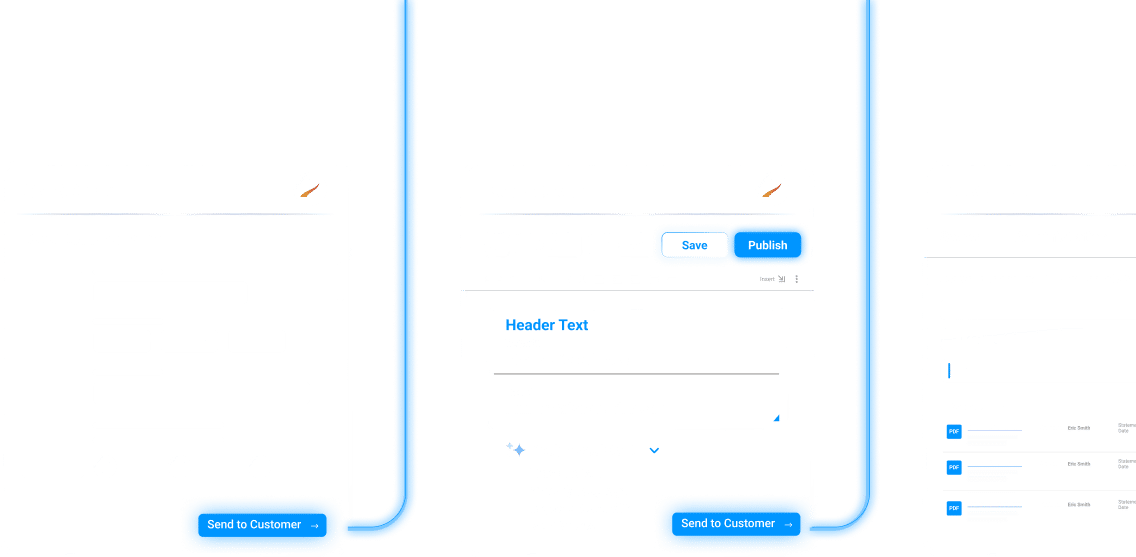
Insurance data collection does not live in isolation. It connects to the communications customers receive, the actions they take, and the records teams need later. When SmartIQ connects to insurance communications, submitted information can flow into accurate, personalized documents created with SmartCOMM.
When data collection connects to omnichannel orchestration, SmartPATH can coordinate reminders, next steps, channel changes, and assisted-service actions across the customer journey. When completed forms and documents connect to insurance archiving, SmartHUB can help preserve governed records for secure retrieval. Together, these capabilities support a more connected insurance lifecycle.
Use AI to Accelerate Form Modernization and Improve Data Quality
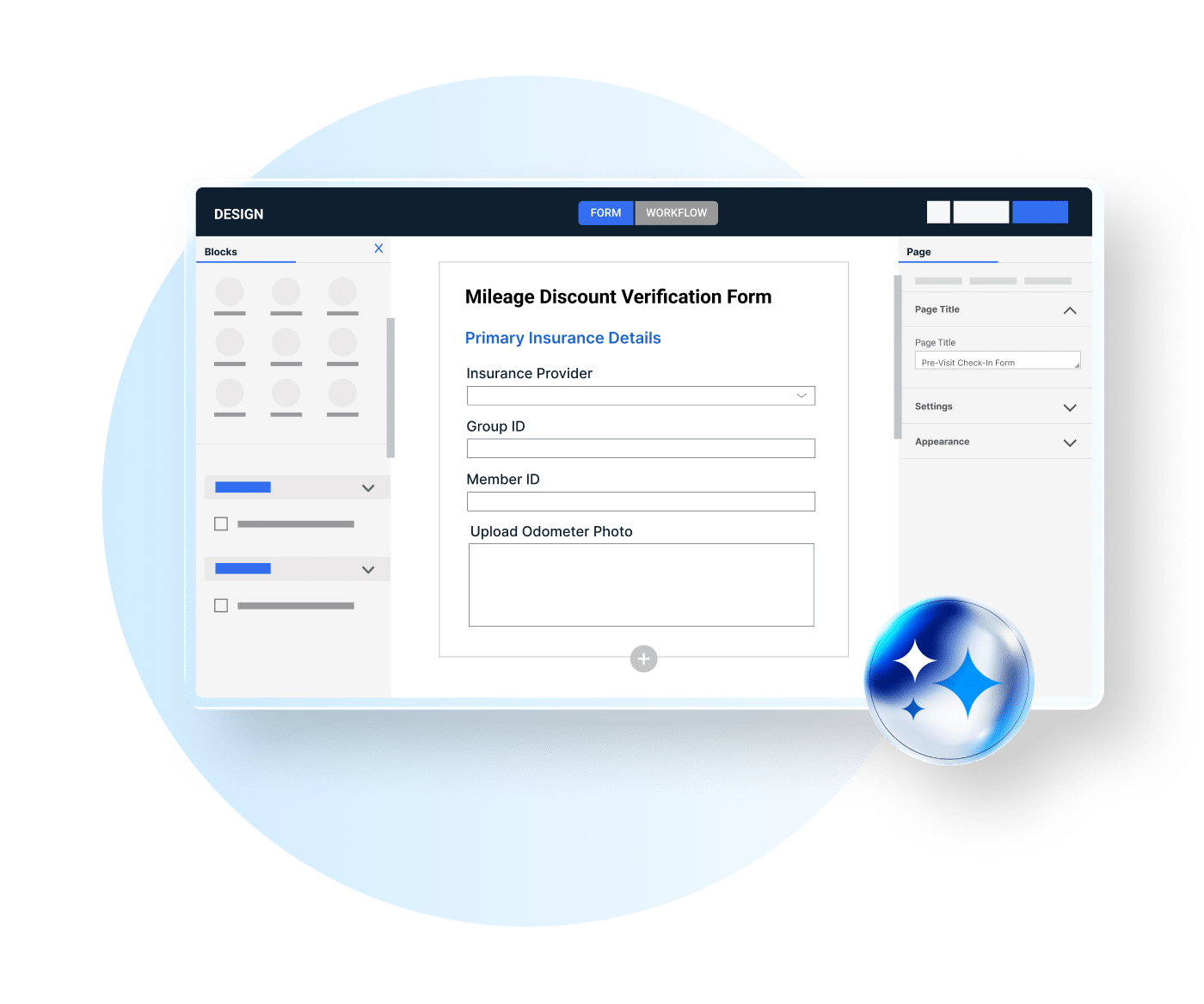
AI-assisted form migration can help teams create a strong first draft of a digital form from an existing PDF or document, reducing the manual work required to rebuild legacy forms. Teams can then review the questions, logic, data mappings, accessibility, and compliance requirements before release.
AI-ready insurance operations also depend on structured, validated, and traceable information. Guided data collection helps create a cleaner foundation for downstream automation, analytics, service, and responsible AI workflows while preserving human review, access controls, logging, and accountability.
Evidence From Insurance Organizations

US-based Insurer
Insurance
Digitization of additional claim information using SmartIQ.
In a Forrester Total Economic Impact study, a US-based insurer digitized the collection of additional claims information using SmartIQ, and was modeled to achieve 136% ROI with payback in less than six months. Interviewed decision-makers also reported that some form-handling and claims processes moved from several weeks to a few minutes and that NPS increased by 13 points.
↑ 136%
ROI in less than six months
+13
NPS Score Increase

Aon New Zealand
Insurance
Implementation of tablet-based SmartIQ inspection process.
AON New Zealand reported that a tablet-based SmartIQ inspection process for field underwriters reduced report-generation time from as long as four weeks to two days and increased rural broker productivity by at least 15% by accelerating the quote-to-bind process.
↓ 26 Days
Report generation
+15%
Broker productivity
Outcomes for Insurance Organizations

Capture more complete, accurate information the first time
Reduce NIGO submissions, manual rekeying, follow-up calls, and operational rework
Shorten cycle times across applications, underwriting, claims, servicing, inspections, and renewals
Improve self-service completion with guided, mobile-ready digital experiences
Lower administrative and servicing costs tied to paper, mail, data entry, and manual handoffs
Improve self-service completion with guided, mobile-ready digital experiences
Lower administrative and servicing costs tied to paper, mail, data entry, and manual handoffs
Give business teams more control over approved form and workflow updates
Respond faster to product, jurisdiction, language, and regulatory changes
Maintain stronger auditability across data, documents, approvals, signatures, and workflow activity
Explore More Insurance Solutions
Explore the solution areas insurers use to modernize key policyholder workflows.

Insurance Communications
Quick Summary: Create, manage, personalize, approve, and deliver regulated policyholder documents and communications across print and digital channels.

Insurance Omnichannel Orchestration
Quick Summary: Coordinate communications, forms, reminders, and follow-up actions across policy, claims, billing, and servicing journeys.

Insurance Document Archiving
Quick Summary: Maintain secure, searchable, audit-ready records of policyholder communications, submitted forms, supporting documents, approvals, and signatures.
FAQs
Insurance Data Collection FAQs
Common questions insurance teams ask when evaluating archive and retrieval solutions.
What Is Insurance Data Collection?
What Is Insurance Form Automation?
How Does SmartIQ Support Insurance Data Collection?
Which Insurance Workflows Benefit From Digital Data Collection?
How Do Digital Forms Reduce Not-in-Good-Order (NIGO) Submissions?
Can Insurers Prefill Information Customers Have Already Provided?
How Do Digital Insurance Forms Support Compliance?
Can Business Teams Update Insurance Forms Without IT?
How Does Insurance Data Collection Connect to Communications and Archiving?
Can Insurers Modernize Data Collection Without Replacing Core Systems?