Document generation refers to the automated creation of documents using data and templates, allowing businesses to produce accurate, consistent, and compliant communications at scale. Instead of relying on copy-paste workflows, your teams can use intelligent document generation software to automatically merge approved content with system data, resulting in ready-to-send, fully branded documents in a fraction of the time.
The Ultimate Guide to Document Generation:
Processes, Use Cases & Tools
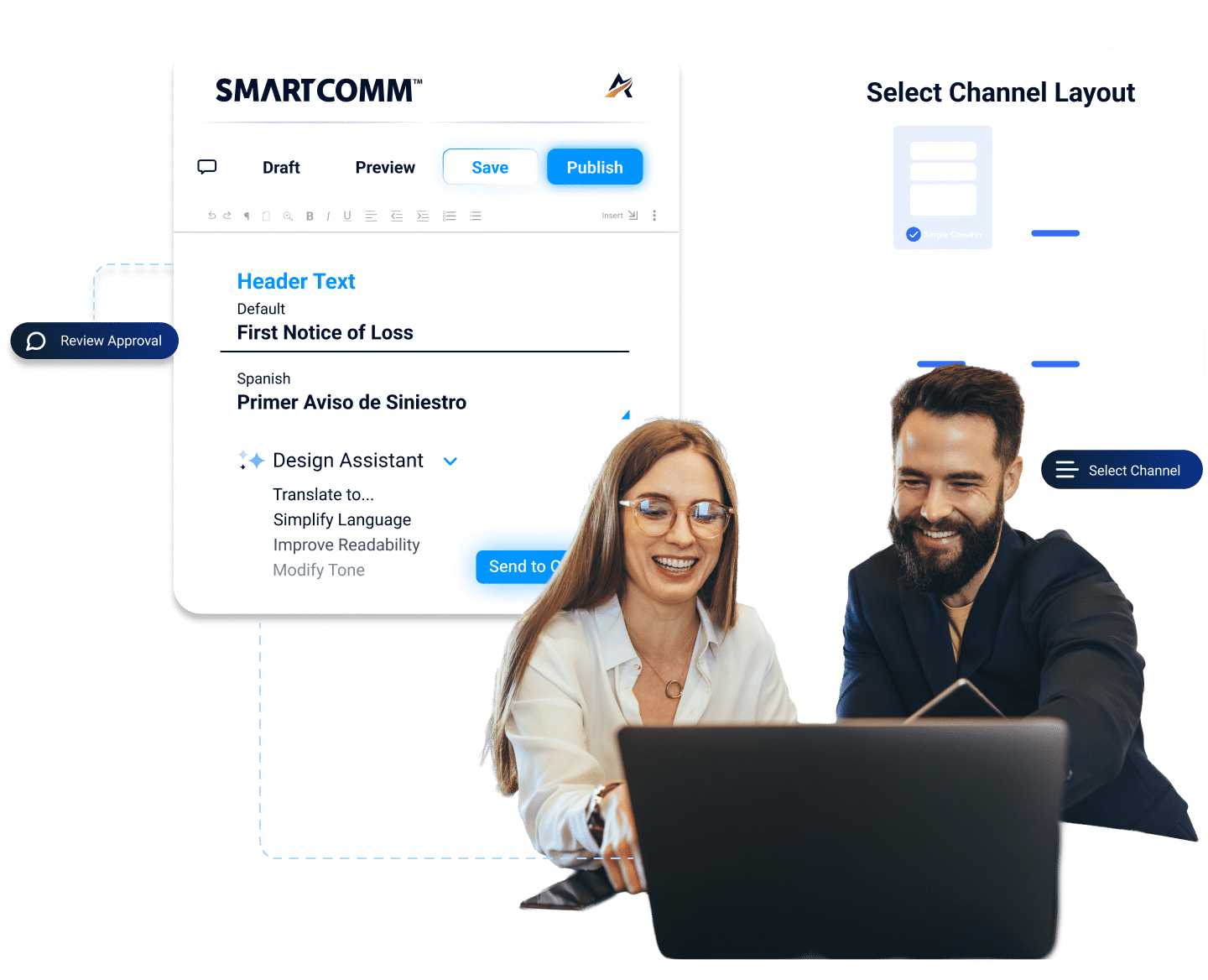

Document generation is the automated creation of customer-ready documents using templates and system data.
Modern document generation software produces accurate, compliant, and personalized communications at scale and in seconds.
In every industry, from insurance to finance to healthcare, documents have been the foundation of customer communication. Policies, contracts, invoices, onboarding packets, claim letters, disclosures — these are not just pieces of paper or PDFs. They’re the touchpoints that shape customer trust, reflect your brand, and prove compliance. Yet, for many organizations, the creation of these documents remains a complex, manual, and error-prone process.
That’s where document generation comes in.
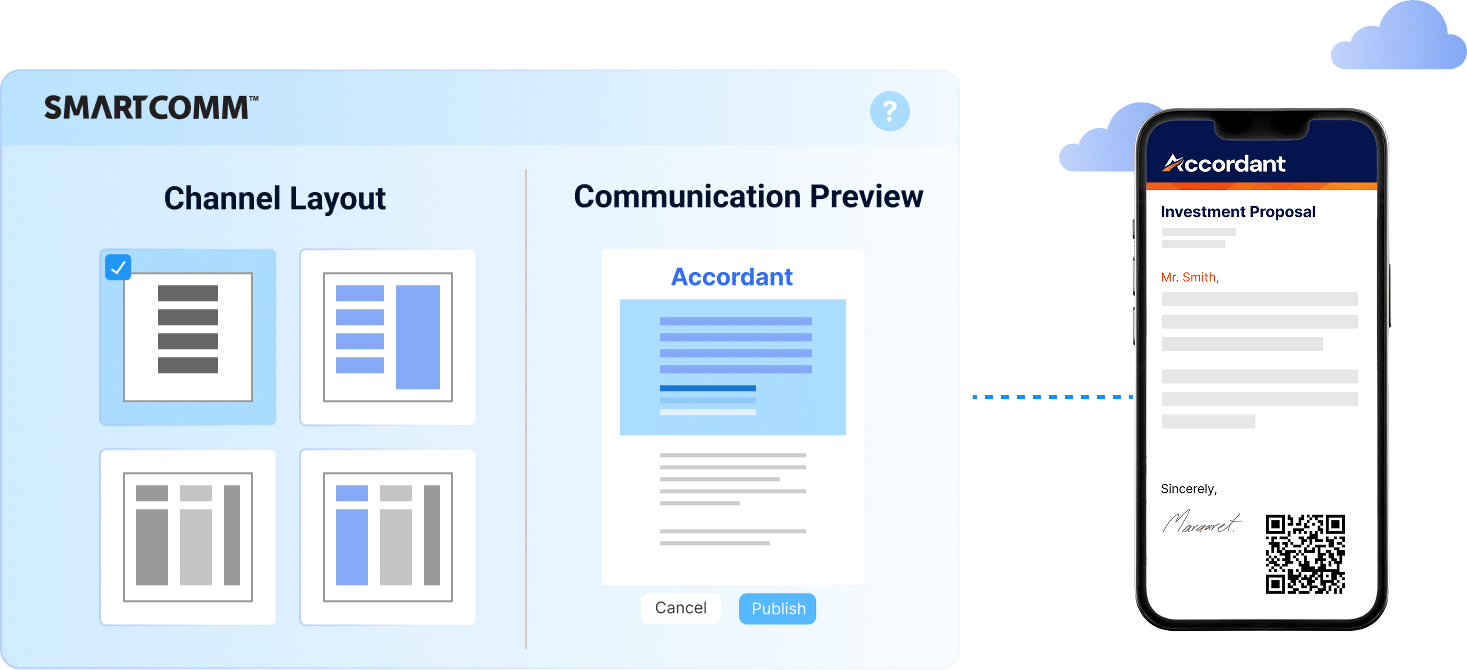
What Is Document Generation, and Why Does
It Matter?
The pace of digital transformation has accelerated expectations. Customers demand immediacy and personalization; regulators demand precision and traceability. Traditional manual document processes can’t keep up with either. Document generation bridges that gap, giving you the power to deliver personalized, compliant communications faster than ever.
By implementing the right document generation software, you can:
- Reduce turnaround times for customer communications
- Automate dynamic communications processes driven by core-system data
- Minimize compliance risks by standardizing templates and language
- Increase accuracy by eliminating manual data entry
- Empower non-technical users to generate complex documents effortlessly
- Enhance the customer experience through timely, personalized communication
In short, document generation turns what was once a back-office task into a strategic enabler of customer engagement and operational efficiency.
If you’re a business leader, operations manager, IT director, or compliance officer responsible for improving customer communications and operational efficiency, this guide is built for you. You’ll gain a practical understanding of what modern document generation entails and how to select the best-fit solution for your organization’s goals.
Whether you’re seeking to reduce manual effort, improve compliance, or transform how your company communicates at scale, document generation gives you the power to move faster, operate smarter, and deliver exceptional customer experiences consistently and confidently.
Why Cloud Document Generation
Software Now
The way organizations create, manage, and deliver documents has changed dramatically over the past decade. The shift from on-premise systems to cloud-based solutions is no longer just a matter of convenience — it’s a competitive necessity. Businesses across industries are realizing that cloud document generation software delivers faster, more scalable, and more compliant ways to communicate with customers.
If you’re still managing document creation through manual processes or legacy systems, you’re likely feeling the pressure to modernize. Below are the key trends driving that shift and why cloud document generation has become essential to keeping pace with evolving business needs and customer expectations.
The Need for Greater Efficiency
Efficiency remains one of the most powerful motivators for adopting document generation tools. Organizations are under increasing pressure to deliver more accurate, personalized, and dynamic communications in less time, with fewer resources. Manual document workflows — custom integrations, creating templates by jurisdiction or channel, manually moving data between systems, and formatting outputs — are not only slow but prone to human error.
Cloud document generation platforms automate these repetitive steps. Once configured, they allow your team to generate personalized, compliant documents in seconds. Whether you’re sending thousands of invoices, insurance policies, or regulatory disclosures, automation drastically reduces turnaround times.
The cloud adds another layer of efficiency: accessibility. Your teams can create, edit, and deliver documents from anywhere: no local installations, no version control issues, and no dependency on IT to push updates. This agility supports today’s hybrid work environments while improving speed and collaboration.
Scalability Without Added Complexity
Traditional on-premise document systems often struggle under growth. As document volumes increase, so does the need for infrastructure, licensing, and maintenance. Cloud-based document generation software eliminates those barriers by scaling automatically as your needs expand.
If your organization experiences a seasonal surge in documents — say, open enrollment periods in healthcare or renewal seasons in insurance — the cloud easily scales up capacity without requiring new hardware or additional administrative burden. You only pay for what you use, and performance remains consistent regardless of volume.
This scalability also extends across geographies. Global enterprises can manage document creation in multiple languages, currencies, and regulatory environments within one unified platform.
Heightened Focus on Compliance and Accuracy
Regulatory oversight continues to intensify across industries. Inaccurate or inconsistent documentation can lead to serious compliance penalties and erode customer trust. Cloud document generation software mitigates this risk by ensuring every output adheres to the latest approved content, disclosures, and legal language.
Centralized template management makes it easy to update terms or disclosures globally, ensuring every document generated — from a single invoice to a complex insurance policy — meets current regulatory requirements. Built-in version control, audit trails, and role-based access further strengthen compliance posture.
In industries such as insurance, finance, and healthcare, this consistency isn’t optional — it’s mission-critical. By centralizing templates and automating data population, you minimize human error and ensure your documents remain accurate and compliant at scale.
Cost Savings and Operational Optimization
Manual document creation consumes valuable staff time and often requires multiple rounds of review and correction. Over time, those inefficiencies add up to significant operational costs. Cloud document generation drives measurable savings by reducing manual effort, eliminating printing and distribution redundancies, and minimizing compliance-related rework.
Beyond labor costs, cloud solutions remove the need for expensive hardware and ongoing IT maintenance. Updates, security patches, and new features are automatically deployed, keeping your system up to date without downtime or disruption.
The result? A leaner, more agile operation that can focus resources on strategy and customer engagement rather than document management.
Evolving Customer Expectations
Modern customers expect immediacy, personalization, and digital convenience. Whether they’re reviewing an insurance policy, signing a loan agreement, or confirming a healthcare claim, they want accurate documents delivered fast, in their preferred channel.
Cloud document generation supports this customer-first approach by enabling omnichannel delivery. You can generate a document once and deliver it digitally, via print, or through secure portals — all automatically.
When you combine automation with personalization, you transform static forms into meaningful, interactive communications that reinforce trust and loyalty.
How to Find the Right Document
Generation Solution
Selecting the right document generation software is a pivotal decision that can directly impact your organization’s efficiency, compliance, and customer experience. The right platform empowers your teams to create, manage, and deliver accurate documents faster. The wrong one can slow operations, create integration issues, and undermine your compliance posture.
With so many vendors promising automation and scalability, it’s critical to know what to look for. Whether you’re modernizing legacy systems or implementing document generation for the first time, this section helps you navigate key considerations, essential features, and questions to ask before you commit.
Understand Your Business Needs
Before evaluating providers, clarify what you need your solution to achieve. Are you looking to:
- Automate high-volume document creation (e.g., policies, statements, or invoices)?
- Improve compliance and standardization across teams?
- Personalize customer communications at scale?
- Integrate document generation with existing systems like CRM, core system, or policy admin tools?
Start by mapping out your current document processes. Identify where manual steps create delays or introduce errors. Then, define measurable goals — such as reducing turnaround time, improving accuracy rates, or cutting compliance review cycles.
By understanding your business drivers first, you can better align technology to your strategic outcomes rather than chasing features you may never use.
Look for Core Features That Drive Value
Not all document generation platforms are created equal. To ensure scalability and longevity, prioritize these core capabilities:

Template creation and management: Look for an intuitive, drag-and-drop design interface that allows non-technical users to build templates quickly and consistently.

Content and accessibility intelligence: To ensure you strike the right tone with every communication, features like readability scoring, sentiment analysis, and accessibility best practices should be built into the template design process.

Data integration: Seamless connectivity with systems like Salesforce, Guidewire, or Pega is vital. Your platform should pull data directly from your trusted sources.

Omnichannel output: The solution should support multiple delivery formats — print, PDF, HTML, email, SMS, and more — so you can meet customers wherever they are.

Automation and workflow control: Built-in workflow automation ensures documents are created, reviewed, and approved according to defined rules.

Security and compliance: Enterprise-grade encryption, access controls, and audit trails are non-negotiable, especially in regulated industries.
If your organization operates across global markets, multilingual and localization support are also essential to maintain consistency in every region.
Evaluate Providers Carefully
Once you’ve identified the features you need, it’s time to evaluate potential vendors. A few key factors to assess:

Scalability: Can the platform handle spikes in document volume without performance issues?

Flexibility: Does it allow configuration for your specific business processes and workflows?

Reliability and availability: Seek consistent, always-on performance with strong uptime commitments and proven operation at enterprise scale.

Deployment model: Cloud-based solutions offer agility and cost efficiency, but confirm that the vendor’s architecture aligns with your organization’s data policies.

Support and training: Look for comprehensive onboarding, 24/7 customer support, and an active knowledge base.

Proven track record: Research customer testimonials, industry use cases, and independent reviews. The best vendors demonstrate success across your industry.
When possible, request a pilot or proof-of-concept. This lets you validate ease of use, integration compatibility, and performance before committing to a full rollout.
Prioritize Customization and Flexibility
Every business has unique requirements. The best document generation software allows you to configure templates, workflows, and data rules without extensive coding. This flexibility ensures your teams can adapt quickly to new regulations, products, or branding updates without relying heavily on IT.
Solutions that support modular templates — reusable components for headers, footers, and legal language — make updates faster and more consistent. Over time, this flexibility translates into major time and cost savings.
Think Long Term
Finally, consider the future. Your document generation needs will evolve as your organization grows, regulations change, and customer expectations increase. Select a provider that invests in innovation, offers regular platform enhancements, and provides a clear product roadmap.
With a cloud-native solution like Smart Communications’ SmartCOMM™, you gain all the flexibility, scalability, and compliance support required to modernize document generation at enterprise scale. SmartCOMM integrates seamlessly with leading systems, enables intuitive template management, and ensures every document is accurate, consistent, and customer-ready — every time.
Non-Negotiables for Document Generation Software
- Template management (modular, reusable components)
- Data integration (native connectors + APIs for Salesforce, Guidewire, SAP)
- Seamless workflows (draft–review–approve, role controls, audit logs)
- Omnichannel output (print/PDF/HTML, accessible formats)
- Compliance (versioning, required clauses, audit logs)
- Performance & scale (burst handling, multi-region)
- Security (encryption at rest/in transit, SSO/SCIM)
- Admin & UX (non-technical authorship, localization)
- TCO (licensing, implementation, support model)
- Embedded AI (sentiment analysis, tone adjustment, summarization, language translation)
The Bottom Line
Finding the right document generation solution isn’t just about replacing manual work; it’s about transforming how your business communicates. When chosen carefully, it can boost efficiency, strengthen compliance, and elevate every customer interaction.
By defining your needs, evaluating key features, and partnering with a trusted, proven provider, you set the foundation for smarter, faster, and more compliant document generation that grows with your organization.
Questions to Ask When Looking for
Document Generation Software
Choosing a document generation platform is not a one-size-fits-all decision. The market is filled with vendors claiming to automate, personalize, and streamline your document workflows — but not every platform is built for enterprise scale or regulatory rigor. Asking the right questions early in the evaluation process helps you separate marketing promises from real capability.
Whether you’re a CIO, operations manager, enterprise architect, or compliance lead, your goal is to ensure the solution fits seamlessly into your ecosystem, supports your security and compliance standards, and can grow with your organization. Below are the key questions you should ask any prospective provider before you invest.
Key Questions to Ask

How user-friendly is the platform for non-technical users?
Can business teams create and manage templates without IT assistance?
Does the software integrate with our existing CRM, ERP, or policy systems?
Are APIs or prebuilt connectors available for seamless data integration?
Can it easy manage the creation of accessible formats, including PDF/UA?
Can it handle structured data from multiple sources?
What security features are included to protect sensitive data?
Does it comply with industry regulations such as HIPAA, GDPR, SOX, or PCI-DSS?
Are audit trails, version control, and activity logs available for compliance purposes?
How flexible is the platform for customizing templates, workflows, and approvals?
Can documents be personalized dynamically based on customer or policy data?
Does it support multichannel delivery, including digital, print, and portals?
How scalable is the platform to handle large volumes or seasonal spikes?
What support and training options are provided during and after implementation?
Does the vendor offer a dedicated customer success manager or implementation partner?
What is the total cost of ownership, including setup, integration, and ongoing maintenance?
How often are innovations added, and will releases require significant upgrades and testing?
By answering these questions, you can quickly identify which vendors meet your operational, compliance, and customer experience requirements.

Building a Business Case for Change
How to Secure Stakeholder Buy-In When Purchasing Enterprise Customer Communications Management (CCM) Software
View ResourceBenefits of Using Document Generation
Document generation is no longer just a back-office efficiency tool — it’s a strategic capability that directly impacts operational productivity, compliance, and customer experience. When implemented correctly, document generation software allows you to streamline workflows, reduce errors, and create a more consistent, personalized experience for every customer.
Here’s a closer look at the key benefits you can expect when you adopt a modern document generation platform:

Streamlined Template Design
Creating reusable templates is one of the most powerful ways to improve efficiency. With document generation software, you can build modular templates that standardize branding, formatting, and legal language across all document types. This means your team spends less time on manual formatting or repetitive content updates.
By leveraging a central repository of templates, you ensure that all communications — whether an insurance policy, loan agreement, or patient letter — maintain a consistent look, feel, and tone. This not only accelerates document creation but also strengthens your brand and compliance posture.
Consistency Across Documents
Consistency matters in regulated industries and customer-facing communications alike. Manual processes can lead to variations in terminology, formatting errors, or outdated disclosures — all of which can create confusion or compliance risk.
Document generation software enforces standardization by ensuring that every output adheres to pre-approved templates and content rules. When your documents are consistent, you reduce the likelihood of errors, maintain regulatory compliance, and deliver a professional, trustworthy experience to every recipient.
Increased Efficiency
Automation is the core advantage of document generation. By automatically merging data from your systems into templates, your teams can produce large volumes of documents quickly and accurately. This eliminates repetitive manual tasks like data entry, proofreading, and formatting, freeing your staff to focus on higher-value work such as customer engagement, compliance oversight, or business growth initiatives.
Furthermore, advanced solutions with embedded AI tools such as sentiment analysis, summarization, readability improvements, and language translation can help speed refinement and optimization, further accelerating content creation.
With workflow automation, you can also implement approvals, notifications, and routing rules, ensuring that every document follows your defined processes without bottlenecks or delays. The result is faster turnaround times and improved operational productivity.
Enhanced Personalization
Modern customers expect communications that are tailored to their needs. Document generation software allows you to personalize every communication at scale. By leveraging data from CRM, ERP, or policy administration systems, you can dynamically populate customer names, policy details, account information, and personalized messaging into each document.
Personalized communications improve engagement, reduce call center costs, and build trust. In regulated industries, this level of precision also ensures that personalized content remains compliant with disclosure requirements.
Improved Compliance and Accuracy
Document generation software reduces the risk of human error and ensures regulatory compliance. Templates can be preconfigured to include required legal language, disclosures, and audit tracking. Built-in version control and audit logs provide transparency for every document created, edited, or approved, helping your organization pass internal and external audits with confidence.
This is particularly critical in industries like insurance, finance, and healthcare, where compliance violations can carry significant financial and reputational consequences.
Scalability for Growing Operations
As your organization grows, so does the volume of documents you generate. Cloud-based document generation platforms allow you to scale seamlessly without adding staff or infrastructure. Whether you’re producing thousands of invoices, insurance policies, or patient letters across multiple brands or jurisdictions, the system can handle large volumes efficiently, maintaining speed, accuracy, and compliance.
Cost and Resource Savings
By automating repetitive tasks, reducing errors, and minimizing manual reviews, document generation software lowers operational costs. You save time, reduce rework, and optimize resource allocation. Additionally, cloud deployment eliminates the need for on-premise hardware and ongoing IT maintenance, further reducing total cost of ownership.
The Smart Communications Advantage
With Smart Communications, these benefits are realized through a cloud-native, enterprise-grade platform that unifies template management, workflow automation, and omnnichannel delivery. Your teams gain the ability to produce consistent, compliant, and personalized communications quickly, while IT gains the flexibility and security needed to support complex enterprise environments.
By adopting intelligent document generation, you don’t just improve operations — you transform how your organization communicates, creating faster, more accurate, and more engaging experiences for every customer.

The Smart Communications Advantage
Smart Communications is committed to keeping our customers and their customers safe. Visit our Security and Trust page to see the measures we are taking to ensure adherence to strict compliance standards.
Trust and SecurityCommon Document Generation Challenges and
How to Overcome Them
While document generation software offers significant benefits, implementing it effectively requires careful planning. Many organizations encounter challenges that can reduce efficiency, slow adoption, or compromise compliance if left unaddressed. Understanding these obstacles — and knowing how to overcome them — ensures that your investment delivers the maximum return.
Poor Template Scalability
CHALLENGE
A common challenge is building templates that don’t scale with your organization’s needs. Static or overly complex templates can be difficult to maintain, especially when you need to update content, branding, or compliance language across hundreds or thousands of documents.
SOLUTION
Adopt a platform that supports modular, reusable templates. By designing components like headers, footers, and legal clauses as separate elements, you can update content once and propagate changes across all relevant documents. This approach reduces maintenance time and ensures consistency across communications.
Data Mapping and Integration Issues
CHALLENGE
Document generation relies heavily on accurate, accessible data. Organizations often struggle when their software cannot integrate seamlessly with CRM, ERP, or policy administration systems, leading to incorrect or missing data in generated documents.
SOLUTION
Choose a solution with robust data integration capabilities, including API connectors and prebuilt integrations for your core systems. Ensure the platform supports both structured and unstructured data, and test data flows during implementation to confirm accuracy. Smart integrations allow you to automate document creation confidently, without introducing errors.
Limited System Integrations
CHALLENGE
Even when data is accurate, a platform that doesn’t integrate with your broader technology ecosystem can become a bottleneck. Lack of integration limits workflow automation and increases manual intervention.
SOLUTION
Prioritize document generation software designed for enterprise interoperability. Cloud-native platforms typically offer extensive integration options with CRM, ERP, digital experience, and communication tools. This enables end-to-end automation and ensures documents are delivered through the right channels, without unnecessary manual steps.
High Implementation Costs
CHALLENGE
Some organizations hesitate to adopt document generation due to perceived high costs, including software licensing, consulting fees, and IT resource allocation.
SOLUTION
Evaluate cloud-based platforms that provide scalable pricing and faster implementation. Cloud solutions minimize upfront infrastructure costs and reduce ongoing IT overhead. Additionally, vendors like Smart Communications offer implementation support, AI-powered tools, and best-practice guidance to decrease complexity, accelerate deployment, and reduce total cost of ownership.
Resistance to Change
CHALLENGE
Even the best software can fail if teams are resistant to adopting new workflows. Employees accustomed to manual document creation may be skeptical of automation, slowing adoption.
SOLUTION
Focus on user-friendly interfaces and intuitive template design tools. Provide comprehensive training and support to empower business users to manage documents independently. Communicate the benefits clearly — less manual work, fewer errors, and faster turnaround times — to encourage engagement and adoption.
Ensuring Compliance Across Complex Workflows
CHALLENGE
In highly regulated industries, inconsistencies or outdated templates can create compliance risks. Even small errors in financial disclosures, insurance policies, or healthcare communications can carry severe consequences.
SOLUTION
Implement a system with built-in compliance controls, versioning, and audit trails. Automation ensures every document adheres to approved templates, legal language, and regulatory requirements. Regularly review and update templates to reflect changes in legislation or organizational policy.

How Smart Communications Addresses These Challenges
Smart Communications has designed its SmartCOMM platform to tackle these challenges head-on:
- Modular templates and low-code design simplify updates and ensure scalability.
- Robust integration capabilities pull data accurately from CRMs, ERPs, and policy systems.
- Cloud-native architecture and powerful migration accelerators enable rapid deployment and effortless scaling.
- Built-in security, audit trails, and versioning support compliance requirements.
- User-friendly interfaces and comprehensive support accelerate adoption and reduce resistance.
By proactively addressing these barriers, you can maximize efficiency, maintain regulatory compliance, and create a seamless experience for both employees and customers.
Industry-Specific Use Cases for Document Generation
Document generation is versatile, but its impact becomes most visible when applied to industry-specific workflows. Different sectors face unique compliance requirements, operational challenges, and customer expectations. By tailoring document generation to these needs, your organization can streamline processes, reduce risk, and deliver personalized experiences at scale.
Here’s a closer look at how cloud-based document generation benefits insurance, finance, and healthcare organizations:

Insurance
Policy Documents and Claims Communications
In the insurance industry, documents are not just informational — they’re legally binding communications that must adhere to strict regulatory requirements across states, products, and lines of business. Policy documents, claim letters, renewal notices, and compliance disclosures all demand accuracy, consistency, and timeliness.
By leveraging a cloud document generation platform, you can:
- Automatically generate policy statements and renewal notices from policy administration data using standardized, compliant templates.
- Produce claims letters with pre-approved legal language, dynamically personalized for each customer based on policy details and event data.
- Ensure every document meets regulatory standards through controlled templates, versioning, and approval workflows, reducing compliance risk.
- Distribute communications through multiple channels — email, digital portals, or print — while maintaining consistent branding.
Smart Communications’ platform enables insurers to scale document production during peak periods, such as renewal season, without compromising accuracy or compliance. By automating these workflows, insurers improve customer satisfaction, reduce operational costs, and accelerate claim processing.

Finance
Client Onboarding, Disclosures, and Agreements
Financial services organizations handle highly sensitive information and operate under strict compliance frameworks, such as SOX, PCI-DSS, and GDPR. Errors in loan agreements, statements, account disclosures, or client onboarding documents can result in fines, operational delays, or reputational damage.
Document generation helps you:
- Automatically produce loan agreements, account statements, and regulatory disclosures using accurate data from your core systems.
- Personalize client communications at scale without increasing risk.
- Standardize compliance language across all outputs, ensuring every document adheres to legal and regulatory requirements.
- Reduce the manual effort and turnaround time associated with high-volume, repetitive documentation.
By implementing intelligent document generation, financial institutions can accelerate onboarding, maintain compliance, and provide clients with a faster, more accurate, and more professional experience.

Healthcare
Patient Communications and Billing Documents
Healthcare organizations face unique challenges: patient privacy, regulatory compliance (HIPAA, CMS guidelines), and high-volume communications. Errors or delays in patient letters, billing statements, or financial assistance forms can have serious consequences for both compliance and patient satisfaction.
Document generation can transform healthcare communications by enabling you to:
- Automatically produce patient correspondence, billing statements, and care instructions.
- Ensure sensitive data is encrypted and delivered securely, maintaining HIPAA compliance.
- Standardize templates to maintain accuracy, consistency, and compliance across departments.
- Personalize communications to reflect patient-specific data, reducing confusion and inquiries.
With automated workflows, healthcare providers can streamline administrative tasks, reduce human error, and focus on delivering better patient care while staying compliant with evolving regulations.

Cross-Industry Benefits
While each industry has unique requirements, certain benefits of document generation apply universally:
- Time and Cost Savings: Automation reduces manual labor and errors, freeing staff for higher-value work.
- Consistency and Accuracy: Pre-approved templates ensure consistent branding, legal language, and data integrity.
- Scalability: Cloud-based solutions can handle seasonal spikes or rapid business growth without infrastructure strain.
- Omnichannel Creation: Documents can be built in a single template and used across any channel.
By addressing industry-specific requirements while leveraging a centralized platform, you can achieve operational efficiency and compliance simultaneously.
How Document Generation Can Improve Security, Compliance, and Regulatory Standards
In highly regulated industries such as insurance, finance, and healthcare, document generation is a critical mechanism for maintaining security, compliance, and regulatory adherence. Errors in legal disclosures, sensitive customer data, or audit trails can have serious consequences, ranging from financial penalties to reputational damage. Modern document generation software addresses these risks while enabling you to streamline workflows and maintain operational efficiency.

Ensuring Data Security
Protecting sensitive information is paramount. Document generation software helps safeguard data at every stage of the document lifecycle: creation, storage, and delivery.
Key security capabilities to look for include:
- Encryption: Documents and data should be encrypted both at rest and in transit.
- Access controls: Role-based permissions ensure only authorized personnel can view or modify documents.
- Secure storage: Cloud-based platforms should offer secure, compliant storage environments that meet industry standards.
- Audit trails: Every action — from creation to approval — is logged for accountability and traceability.
By implementing these controls, you ensure that personal, financial, and health-related data is fully protected from unauthorized access, reducing risk across your organization.

Regulatory Compliance Made Easy
Regulatory requirements are constantly evolving. Document generation software helps organizations stay compliant by embedding legal and disclosure requirements directly into templates. Benefits include:
- Preconfigured templates: Automatically include required disclosures, legal language, and standardized content.
- Consistency across documents: Every policy, claim letter, or financial disclosure adheres to approved standards, reducing human error.
- Automated updates: When regulations change, templates can be updated centrally to ensure all new documents comply automatically.
Whether it’s HIPAA for healthcare, GDPR for data privacy, SOX for financial reporting, or CMS regulations for insurance, automated document generation ensures that your organization consistently meets current compliance requirements.

Standardizing Compliance Across Documents
Consistency is essential in high-stakes communications. Automated document generation ensures that every communication — whether a patient form, loan agreement, or insurance claim letter — contains the required legal and compliance elements.
Standardization benefits your organization by:
- Eliminating inconsistencies caused by manual document creation
- Ensuring required disclosures are never omitted
- Maintaining uniform branding, language, and formatting
This systematic approach reduces compliance risk and enhances the reliability of every customer-facing document.

Streamlining Compliance Reviews
Compliance doesn’t need to be an afterthought. Modern document generation platforms enable preconfigured compliance checks and approval workflows, automatically flagging documents that fall short of regulatory standards before they are finalized or sent to customers.
This proactive approach ensures that compliance is built into the document creation process, rather than retrofitted after the fact, saving time, reducing risk, and improving audit readiness.

Keeping Up with Changing Regulations
Regulatory landscapes are dynamic. Cloud-based document generation platforms allow you to update templates and workflows quickly to reflect new or revised regulations, minimizing the risk of outdated or non-compliant documents.
By maintaining a single source of truth for all templates and compliance content, you can adapt swiftly, reduce operational disruption, and continue delivering timely, accurate communications to customers.
Document Generation Strategy: Next Steps
Document generation is no longer a back-office convenience — it has become a critical driver of operational efficiency, compliance, and customer experience. In today’s fast-paced, highly regulated business environment, the ability to create accurate, consistent, and personalized documents at scale can differentiate your organization from competitors while reducing risk and costs.
Throughout this guide, we’ve explored the many facets of document generation, from foundational concepts to industry-specific applications, compliance strategies, and practical vendor selection tips. By now, it should be clear that adopting a modern document generation platform is not just a technology upgrade — it’s a strategic transformation that affects every part of your business.
Key Takeaways

Document Generation Streamlines Operations
By automating repetitive tasks such as formatting, data entry, and template updates, document generation software dramatically reduces turnaround times. Your teams can focus on higher-value activities, while your organization benefits from increased productivity and faster customer interactions.

Consistency and Accuracy Are Essential
Modern document generation ensures that every document adheres to approved templates, branding, and regulatory language. This consistency minimizes errors, strengthens compliance, and maintains a professional, trustworthy experience for customers and stakeholders alike.

Compliance and Security Are Built In
Enterprise-grade solutions provide encryption, role-based access, audit trails, and version control. These capabilities protect sensitive data and ensure adherence to industry regulations like HIPAA, GDPR, SOX, PCI-DSS, and CMS standards — reducing risk and simplifying audits.

Scalability Supports Growth
Cloud-based document generation platforms allow organizations to scale operations effortlessly, whether you’re producing thousands of documents during peak periods or expanding into new markets. You gain flexibility without increasing staff or infrastructure.

Personalization Enhances Customer Experience
Automated, data-driven personalization enables you to tailor communications to each customer’s needs, preferences, and situation. From insurance policy statements to patient letters or financial disclosures, personalized documents improve engagement, reduce inquiries, and build trust.

Industry-Specific Benefits
Document generation delivers tangible value across sectors: insurers streamline policy and claims communications, financial institutions accelerate onboarding and disclosures, and healthcare organizations improve patient correspondence while maintaining strict compliance.
Why Smart Communications Stands Out

Smart Communications’ SmartCOMM solution exemplifies how intelligent document generation transforms business operations. Its modular template design, robust integrations, compliance features, AI capabilities, and cloud-native architecture empower organizations to generate accurate, personalized, and compliant documents at scale. By connecting your data, systems, and workflows, SmartCOMM enables smarter communication that improves efficiency, reduces risk, and strengthens customer trust.
Next Steps for your Organization
To fully leverage document generation, you need a solution that aligns with your operational, compliance, and customer engagement goals. Evaluate vendors based on ease of use, integration capabilities, security, scalability, and support. A cloud-based platform with flexible, reusable templates and automated compliance checks will maximize efficiency and minimize risk.
If you’re ready to modernize your document processes, streamline workflows, and deliver accurate, compliant, and personalized communications at scale, the next step is clear: request a demo of Smart Communications’ SmartCOMM platform. Seeing the platform in action will demonstrate how it can meet your organization’s unique needs and transform the way you communicate with customers, employees, and stakeholders.

Final Thoughts
Document generation is more than software — it’s a strategic capability that drives operational excellence and enhances customer relationships. By automating workflows, standardizing content, ensuring compliance, and enabling personalization, you position your organization to thrive in a fast-paced, regulated world.
With the right platform, like SmartCOMM, document generation becomes a competitive advantage — allowing you to operate smarter, faster, and more confidently, while delivering the high-quality, compliant communications your customers expect.
To learn more about how you can take your organization’s document generation strategy to the next level, request a demo today.


FAQs
Frequently Asked Questions
When evaluating or implementing document generation software, you likely have a range of questions about functionality, security, compliance, and operational impact. This FAQ addresses the most common inquiries, giving you clear, actionable answers while highlighting the value of modern document generation solutions.
It’s also a condensed version of many sections covered throughout this guide, providing an easy and quick-to-read breakdown for busy executives to skim for pertinent information.
What is document generation?
How does document generation work?
Is document generation secure?
How does document generation ensure compliance?
Can document generation improve efficiency?
What types of documents can be generated?
Can the software handle personalization?
How scalable is document generation?
Does document generation integrate with existing systems?
How do I select the right document generation solution?